
Heirloom vegetable seed kit
Premium Vegetable Seed Vault Kit
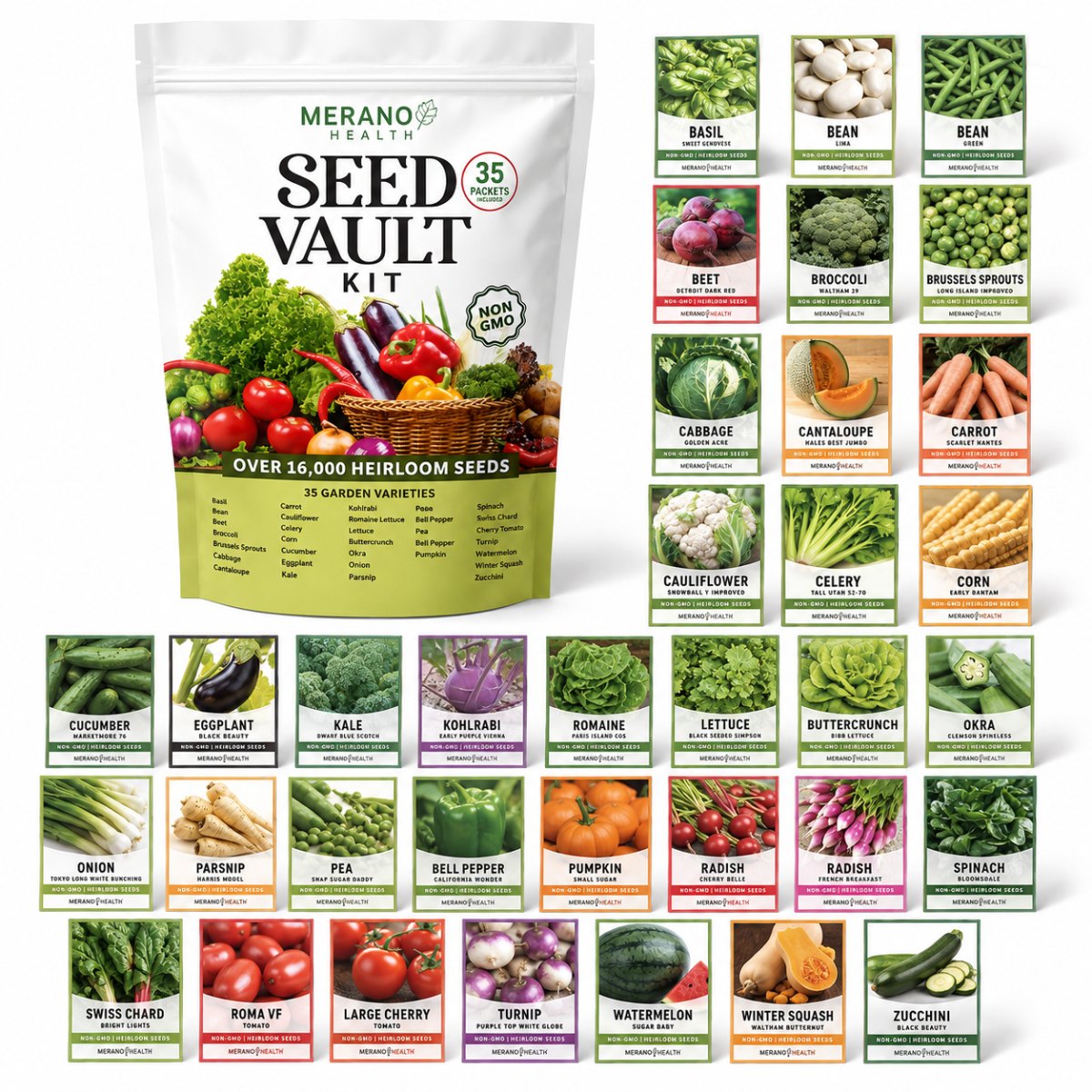
35 labeled heirloom vegetable varieties — over 16,000 seeds — in one resealable Mylar bag. Plant a garden this season, then save seeds from what you grow and plant again next year.
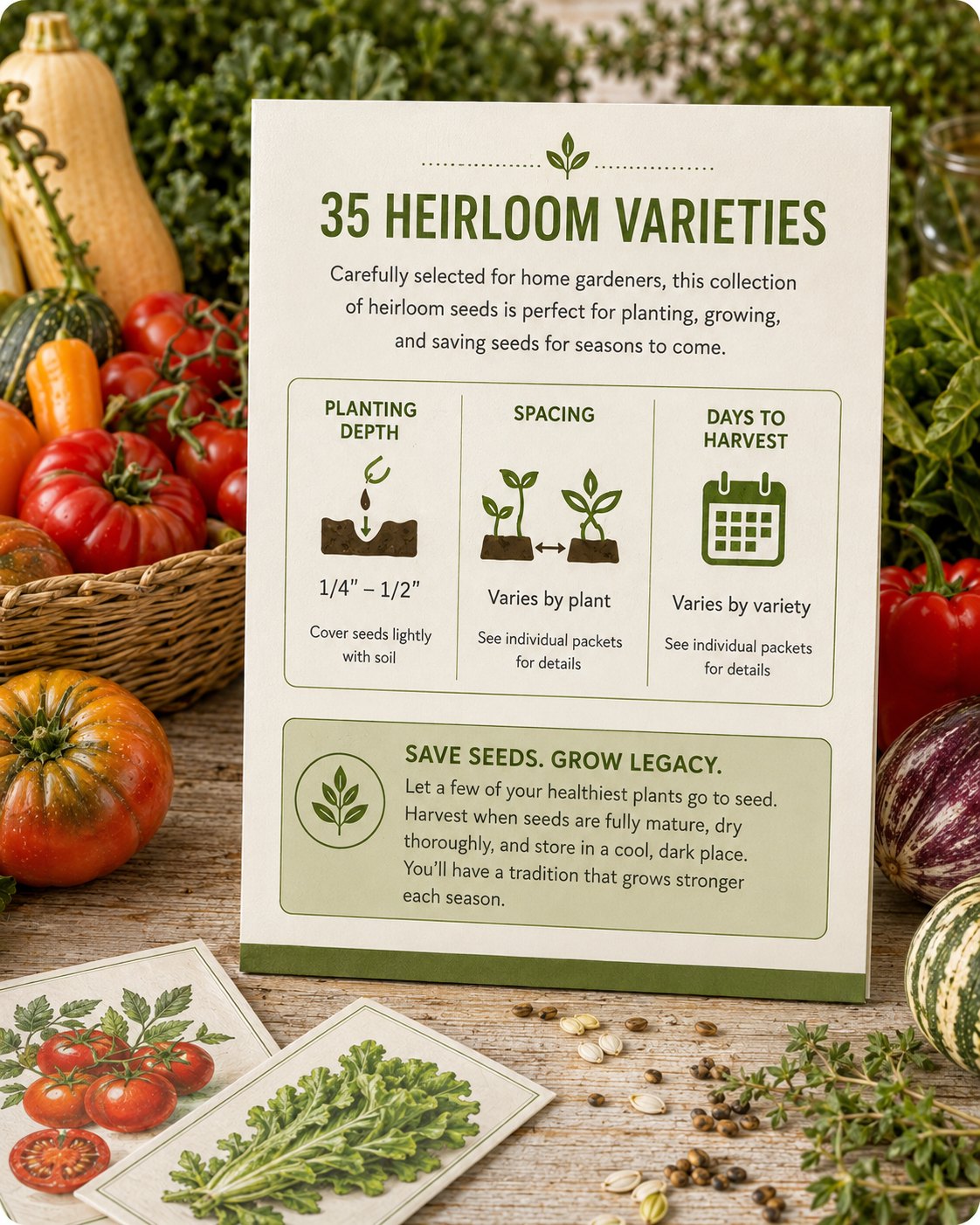
- 35 separate paper packets, each printed with its own planting instructions
- Every variety is organic, heirloom, non-GMO, non-hybrid and open-pollinated — the seeds you save grow true to type
- 35 plant markers and a zip-seal bag to keep unplanted packets cool, dark and dry
35 individual paper seed packets (one per variety, planting instructions printed on each), 35 plant markers, and one resealable Mylar zip bag. Total seed count is 16,000+ (approximate; varies by lot). No soil, pots or tools are included.
Orders are processed within 24–72 hours and delivered in 6–15 days with tracking. Returns are accepted within 30 days of delivery on unopened kits in original packaging — email support@meranohealth.com to start one. If anything arrives damaged or wrong, contact us right away and we will make it right.
Keep packets inside the zipped bag in a cool, dark, dry spot — a closet shelf beats a garage. Longevity differs by crop, so plant some of each variety you care about within the first season or two rather than sealing the whole kit away.

Why now
More households are growing part of their own food again.
Not out of panic — out of a wish for a little control. A backyard bed, a few raised boxes or a row of containers is the one part of the food chain you run yourself.
Prices and shelves you don't control
When produce prices jump or shelves thin out, a garden keeps producing on its own schedule.
Produce that tastes like less
Store tomatoes are picked early to survive shipping. A homegrown heirloom is picked when it's ripe.
A backup that's useful today
Plant part of the kit this season and keep the rest sealed. You eat better now and hold seed for later.
Why heirloom is the whole point
One bag can start many seasons — because the seeds you save grow true.
Most seed racks sell hybrids. They grow fine, but seed saved from their harvest doesn't reliably reproduce the parent plant, so you buy new packets every year. Every variety in this kit is open-pollinated instead.
Easiest crops to save seed from: beans, peas, lettuce, tomatoes and peppers — all in the kit.
Every packet, named
35 varieties. Not "assorted vegetables."
Kits in this category get criticized for hiding what's inside. Here is the list by cultivar, with approximate seed counts.
About the counts. Tiny seeds (lettuce, carrot, celery) come in the thousands; big seeds (beans, corn, squash) come in the dozens. That's true of any seed packet — judge the kit by its 35 crops, not the total.
- Romaine lettuce, Parris Island~2,300
- Looseleaf lettuce, Black Seeded Simpson~2,300
- Bibb lettuce, Buttercrunch~2,300
- Spinach, Bloomsdale or Viroflay~125
- Kale, Vates Blue Scotch Curled~300
- Swiss chard, Fordhook Giant~100
- Paste tomato, Roma VF or San Marzano~180
- Tomato, Large Cherry~100
- Bell pepper, California Wonder~100
- Eggplant, Black Beauty~75
- Cucumber, Marketmore 76~50
- Okra, Clemson Spineless~50
- Carrot, Scarlet Nantes~1,800
- Beet, Detroit Dark Red~180
- Radish, Cherry Belle~200
- Radish, French Breakfast~300
- Turnip, Purple Top White Globe~500
- Parsnip, Harris Model~250
- Onion, Tokyo Long White bunching~250
- Bush bean, Tendergreen~20
- Lima bean, Henderson~25
- Pea, Sugar Daddy snap~25
- Corn, Early Bantam~50
- Zucchini, Black Beauty~25
- Winter squash, Waltham Butternut~25
- Pumpkin, Sugar Pie~15
- Watermelon, Sugar Baby~35
- Cantaloupe, Hales Best Jumbo~50
- Broccoli, Waltham 29~350
- Cauliflower, Snowball Y Improved~300
- Cabbage, Golden Acre or Red Acre~300
- Brussels sprouts, Long Island Improved~250
- Kohlrabi, Purple Vienna~75
- Celery, UT 52-70~3,000
- Basil, Genovese or Large Italian~150
Counts are approximate and vary by lot. Where two names are listed, the variety shipped depends on seed availability that season.
Getting started
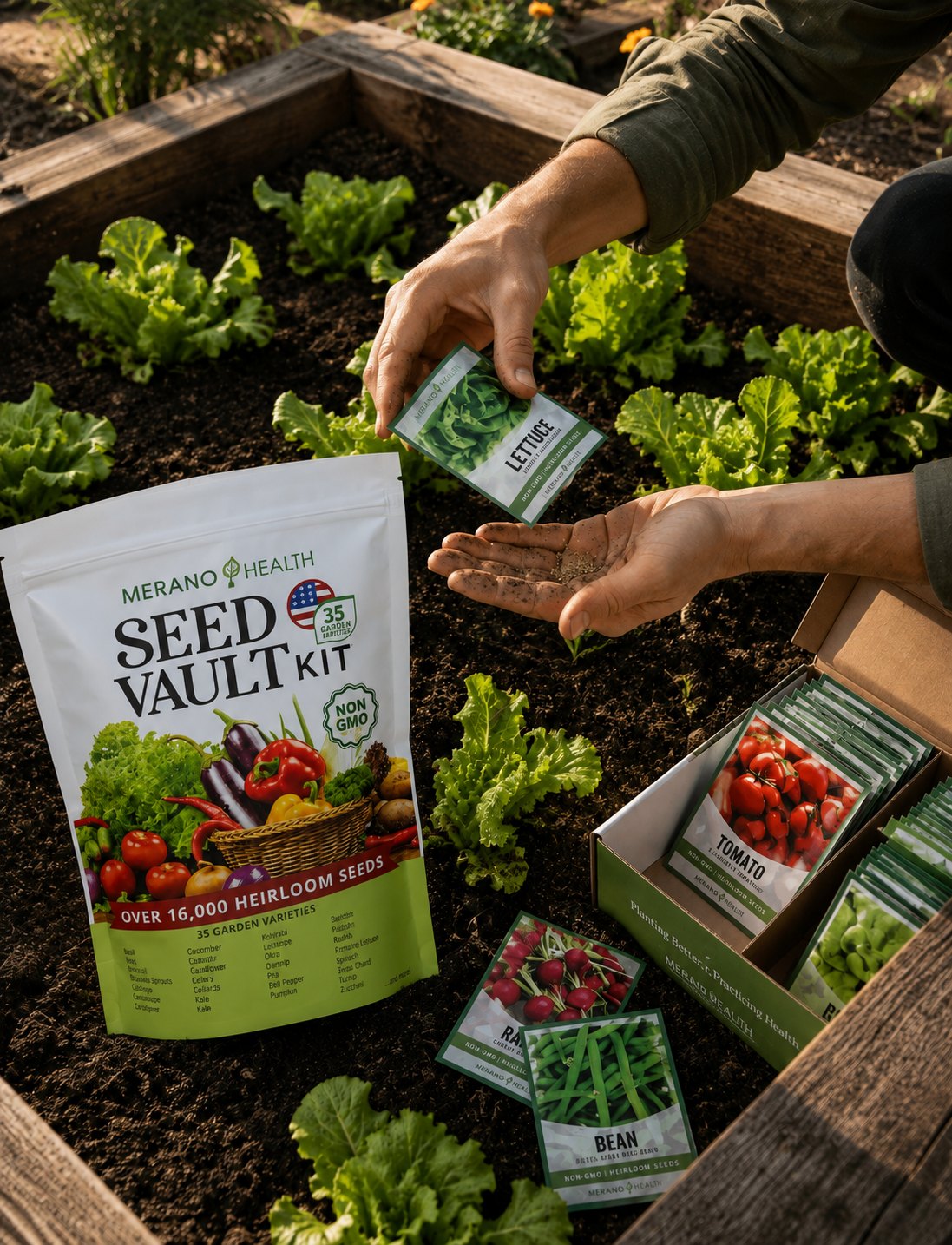
You don't plant all 35 at once.
-
Pick 5–8 packets you'd actually eatLettuce, radish, beans, zucchini and cherry tomato are forgiving first crops.
-
Follow the packetEach one lists depth, spacing, sun and days to harvest. Your last-frost date sets the timing, not your zone number.
-
Mark it, seal the restPush in the included marker, zip the bag and store it somewhere cool, dark and dry.
Plant a test batch this season. Seeds are living things and longevity differs by crop — onion seed fades in a year or two, lettuce can hold for several. Don't seal the bag away and hope. Grow a little now; if a packet is slow, sow it more thickly.
Your real options
How the kit compares to buying seed the usual way.
Picking packets one by one is the right call for experienced gardeners who know their varieties. The kit is for the rest of us.
| Feature | This kit | 35 packets bought individually | Hybrid packets from the rack |
|---|---|---|---|
| Varieties | 35, chosen for you | Any you want — best if you already know your varieties | Any on the rack |
| Save seed and replant | Yes — all open-pollinated | Only if you check each packet | Not reliably; buy again each year |
| Planting instructions | On every packet | On every packet | On every packet |
| Storage | Resealable Mylar bag included | Bring your own container | Bring your own container |
| Matched to your climate | Common US vegetables; you pick which to plant | You can tailor every choice | You can tailor every choice |
| Price | One price for 35 packets | 35 trips to the checkout; usually more per packet | Similar per packet; repeated yearly |
Questions before you buy
Anything else? Email support@meranohealth.com.
Yes. All 35 varieties are organic, heirloom, non-GMO, non-hybrid and open-pollinated.
It depends on the crop and how you store them. Onion seed fades within a year or two; lettuce, beans and tomatoes can hold for several years in cool, dark, dry storage. We don't put one shelf-life number on the whole kit because the crops differ. Plant a test batch early and sow older packets more thickly.
These are common US garden vegetables grown in every state. What matters is your frost-free window, not your zone number: cool-season crops (lettuce, spinach, peas, radish) go in early; warm-season crops (tomato, pepper, squash, beans) go in after your last frost. Each packet gives depth, spacing and days to harvest.
Yes — that is what open-pollinated means. Let a few plants fully mature, collect and dry the seed, and store it in a paper envelope. Beans, peas, lettuce, tomatoes and peppers are the easiest to start with.
Less than you think. You are not planting 35 crops at once. A few containers or one 4×8 raised bed handles a first-season selection; the rest stays sealed in the bag.
Seed size. Lettuce, carrot and celery seed are tiny, so a normal packet holds thousands. Beans, corn, squash and melon seeds are large, so a packet holds a few dozen — the same as any garden-center packet. The kit has 35 distinct crops; the seed total is a byproduct of that.
Start this season's garden. Keep next year's in the bag.
Add to cart today.